Mega Billion Corporation Ltd


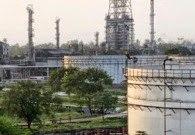
Crude Oil TanksMega Billion Corporation Limited is a leader in the of Nigerian Bonny Light Crude Oil (BLCO) sales market. As a privately held company, Mega Billion Corp. Nigeria Ltd is committed to and is focused on delivering reliable services to all her clients. Mega Billion Corporation Ltd is determined to continue to grow in the energy sector and to become one of the recognized leaders in the Nigerian oil and gas industry.

Simplifying Nigerian Bonny Light Crude Oil Buying, BLCO

Crude Oil Tanks Mega Billion Corporation Nigeria Limited has an excellent track record of reliability in the supply of Bonny light crude oil, BLCO. We protect our buyers with 2% Performance Bond while we also expect protection from our customers with bank instrument from the world's top banks. We deliver on TTO, TTT, CIF and FOB basis.

If you wish to purchase Bonny Light Crude Oil from a reliable seller, contact us and we commence the buyer friendly procedure to enable this.


Showing posts with label Business Facilitator. Show all posts

Thursday, 25 September 2014

UK to allow shale-license holders to retain bigger areas

The UK announced new license terms to spur the development of the resource that may supply the nation with half a century of natural gas from shale rock.


The measures will allow license holders to retain bigger areas and cut costs, Energy Minister Michael Fallon said today, June 24, at a conference. The 14th licensing will be launched “shortly,” he said.


“Unlike traditional oil and gas, shale gas is not concentrated in small high-value fields, but is likely to be dispersed across large areas with ‘sweet spots,’” he told a conference in London. “I am removing unnecessary barriers and introducing a new flexibility to licenses.”


At the same time, the changes will ensure everyone has access to information earlier by cutting the length of time explorers can keep data on drilling and flow rates confidential to six months from four years, he said.


Fallon’s Conservative Party is seeking to spur shale exploration to secure energy resources as North Sea reserves decline. The Bowland basin in northern England may contain as much as 1,300 Tcf of gas, the British Geological Survey has said. That will last almost 50 years based on an extraction rate of 10%, similar to U.S. fields, according to Bloomberg calculations.


Opponents fear that hydraulic fracturing, also known as fracing, causes earthquakes and water contamination as the process uses water, sand and chemicals at high pressure to blast the fuel out of rock.


The Labour opposition party said baseline monitoring should take place for a year before extraction to ensure well integrity and safety, Tom Greatrex, shadow energy minister, said at the same conference via videolink.


Providing useful resources, articles and writings on crude oil, other petroleum products, energy and gas. By Mega Billion Corporation BLCO seller, Nigeria, online.

Thursday, 11 September 2014

DNO falls for second day on fears Iraq tensions could spread north

DNO ASA, the Norwegian oil producer focused on northern Iraq, fell for a second day after Islamist insurgents seized several cities south of the Kurdistan region where it operates.


While no violence has been reported in the semi-autonomous region, the Oslo-based company fell as much as 5.7% and traded 0.5% lower at 22.19 kroner a share as of 2:01 p.m., extending losses to 6.4% over the last two days.


“When the unrest is at this level and terror groups are involved, the stock will never thrive,” analyst Teodor Sveen Nilsen of Swedbank First Securities said in a phone interview. “The unrest is 150 kilometers from DNO’s Tawke field and might as such not have a big impact, but investors have a lot of others stocks to choose from and will react negatively when faced with uncertainty.”


Militants


DNO, the first foreign oil company to drill in Iraq after the U.S.-led invasion in 2003, got almost 80% of its production from the Kurdish region of the country’s north in the first quarter. The area is situated north of Mosul, Iraq’s second-biggest city, which was seized by militants of the Islamic State in Iraq and the Levant this week.


The violence has raised the prospect of a resurgence of sectarian conflict in Iraq, the second-biggest producer of the Organization of Petroleum Exporting Countries, as Prime Minister Nouri al-Maliki’s Shiite-led government struggles to control Sunni-majority regions.


DNO spokesman Henrik Schwabe couldn’t immediately comment, he said in an email.


Swedbank downgraded DNO to neutral from buy on “increased political risk,” it said in a note yesterday, June 11. “It’s escalated more than I had thought,” Sveen Nilsen said today.


Providing useful resources, articles and writings on crude oil, other petroleum products, energy and gas. By Mega Billion Corporation BLCO seller, Nigeria, online.

Tuesday, 9 September 2014

Germany to draft anti-shale fracing rules on public opposition

Germany plans to adopt regulation that will rule out shale fracing for the foreseeable future.


The government wants to ban hydraulic fracturing in shale rocks and coal beds at depths less than 3 km (1.8 miles) and prohibit all types of fracing in water protection areas, Economy Minister Sigmar Gabriel and Environment Minister Barbara Hendricks said today, July 4. The government will start drafting legislation and seek to adopt it in the second half, Hendricks told reporters today in Berlin. The rules will be re-evaluated in 2021.


Fracing is unpopular in Germany even as Chancellor Angela Merkel’s government is keen to develop domestic energy sources as it closes nuclear plants by 2022. While companies including Exxon Mobil Corp. have drilled test wells into unconventional gas reservoirs in Germany to emulate the U.S. shale-gas boom, little headway has been made because of public opposition.


The new rules, if adopted, would be “the strictest that ever existed in this respect,” the ministers said in a joint letter to the Social Democrats. “Fracing for shale and coal bed gas for economic reasons won’t be possible in Germany for the foreseeable future.”


Fracing for tight gas, which has been done in Germany since the 1960s, will remain allowed under stricter conditions for frac fluids, the ministers said. Fracing will be allowed for scientific purposes if the fluids aren’t harmful to water supplies, it said.


Not Far Enough


The rules don’t go far enough and leave “loopholes” to allow fracing at a later stage, said Julia Verlinden, energy spokeswoman for the opposition Green Party.


“If you want to prevent fracing, you don’t need science projects,” she said today in an emailed statement. “The risk to harm our ground and drinking water supplies with fracing doesn’t justify the short-term drilling for comparably little gas.”


Europe is divided into different camps on fracing. It’s backed by nations including the UK, Poland and Spain and opposed in countries such as France and Germany.


The oil and gas industry says fracing should be at least tested to keep the door open to a technology that may redraw the energy map across Europe by reducing reliance on Russia. Germany has shale gas reserves for about 10 years of full supply and “maybe much more than that,” Kurt Bock, the CEO of the world’s biggest chemical maker BASF SE, said yesterday at a conference in Berlin.


Providing useful resources, articles and writings on crude oil, other petroleum products, energy and gas. By Mega Billion Corporation BLCO seller, Nigeria, online.

Saturday, 30 August 2014

Former NATO commander returns to Balkans hunting for Albanian oil

Fifteen years after Wesley Clark led NATO’s bombing campaign against Serbia, the retired U.S. general is back in the Balkans - looking for oil.


Clark, who was also a presidential candidate in 2004, is a director of two Canadian explorers working in Albania, Bankers Petroleum Ltd. and Petromanas Energy Inc. They’re using modern drilling techniques to revive production in one of Europe’s poorest countries, where oil was first produced in the 1920s.


“Albania has an enormous economic significance for Europe as it has a robust supply of oil, and it should be a strong component of European energy policy,” Clark said in a telephone interview.


Oil exploration is part of Albania’s strategy to repair the damage of four decades of economic isolation under the communist regime of Enver Hoxha, who built more than 700,000 concrete military bunkers before he died in 1985. Albania’s economy, where per capita income remains the lowest in Europe after Bosnia, Ukraine and Moldova, has almost doubled in size in the last decade, according to the World Bank.


Clark, who’s been on Bankers’s board since 2008 and became a Petromanas Energy director last year, was NATO’s supreme allied commander in Europe when the alliance’s bombing campaign forced Serbia to withdraw from Kosovo, where ethnic Albanians make up the majority of the population.


Horizontal Drilling


Bankers, based in Calgary, is using horizontal drilling and water flooding to revive Patos-Marinza, first discovered in 1928 and once Europe’s largest producers. Output, which had dwindled to almost nothing in 2004, is now 20,000 bpd and Bankers plans to drill 170 wells a year to boost production to almost 50,000 bpd by 2020.


“Bankers is a lower risk investment alternative that provides predictable and growing production on a significant reserves and resource base,” Darren Engels, an analyst at FirstEnergy who rates the company a buy, said this month.


Petromanas Energy, also based in Calgary, is a partner with Europe’s largest oil company, Royal Dutch Shell Plc, to hunt for new oil fields in Albania, where the geology is similar to southern Italy, home to some of Europe’s largest onshore fields.


Two wells drilled by the companies have found about 375 MMbbl of oil, according to Petromanas, which holds a 25% stake in the venture. A third, called Molisht-1 is being drilled at the moment.


“What’s happening in Albania is representative of the fact that if price of oil stands at $100 a barrel, people are looking at new opportunities,” Clark said. “If the price stays there, it has changed the geography of oil; it is happening in Albania, it is happening elsewhere in Europe.”


Providing useful resources, articles and writings on crude oil, other petroleum products, energy and gas. By Mega Billion Corporation BLCO seller, Nigeria, online.

Thursday, 14 August 2014

Iraq’s Kurds vow to keep Kirkuk oil fields until referendum

Iraq’s semi-autonomous Kurds plan a referendum for independence and will keep troops in the nearby oil hub of Kirkuk until people there can vote on whether to join the Kurdish enclave, a regional government spokesman said.


“As a people, we have the right to be independent, but the issue is up to the Kurdish people, to be decided upon via a referendum,” Safeen Dizayee, spokesman of the Kurdistan Regional Government, said in an interview in the city of Erbil yesterday, June 30. “We now have arrived at a new reality. If the Kurdish people, through referendum, were to opt for complete independence, we want it to be done through negotiations with Baghdad, like what happened in Czechoslovakia.”


Iraq’s minority Kurds, who historically have resisted control by Arab-dominated central governments, are charting a course to independently develop oil reserves that the KRG calculates at 45 billion bbl - larger than BP Plc’s estimate for deposits in the U.S. or Nigeria, Africa’s biggest producer. Kurdish armed forces moved last month outside their region in northern Iraq and occupied the long-disputed Kirkuk oil fields after the Iraqi army fled from Islamist militants.


Iraq’s central government in Baghdad said any referendum the Kurds may hold, whether to determine the future of the city of Kirkuk and its nearby oil fields or to declare independence for the Kurdish region itself, would be unlawful. “The government doesn’t accept anything outside the constitutional way, which was voted on by the Kurds,” Ali al-Moussawi, media adviser to Iraqi Prime Minister Nouri al-Maliki, said by phone in response to Dizayee’s comments. “If they do this, it would be unilateral and unconstitutional.”


Peshmerga Deployed


The KRG and its Peshmerga armed forces will maintain control of Kirkuk and other disputed areas they hold outside their region until people there can vote on joining the Kurdish enclave, Dizayee said, without providing a date for such a referendum. Kirkuk, including Iraq’s fourth-biggest oil deposit, is an ethnically mixed area claimed also by the central government.


“The KRG can export Kirkuk oil, the same way as it exports the region’s crude” from current KRG-administered fields, Dizayee said.


By securing the oil facilities in and around Kirkuk, the Kurds would add almost 9 billion barrels to their own crude reserves. Iraq, excluding such an enlarged Kurdish-controlled region, would be left with reserves of 141 billion barrels, still the world’s fifth-largest.


Market Prices


The KRG has sold one cargo of crude that it sent by pipeline to the Turkish port of Ceyhan on the Mediterranean Sea, Dizayee said. “Oil was sold according to the market prices on the day of loading and was definitely not sold at half price,” he said. The Kurds deposited revenue from the sale at Turkey’s Halkbank, where they also plan to send money from any future sales.


Brent crude for August settlement, a global price benchmark, rose 0.1% to $112.44 a barrel at 7:44 a.m. local time on the London-based ICE Futures Europe exchange today, July 1.


KRG authorities plan to boost daily crude-export capacity from about 120,000 bbl currently to 400,000 bbl by the end of the year, with a possibility of “additional quantities from Kirkuk,” Dizayee said.


Output from the Kirkuk area has dwindled to 30,000 bpd from 650,000 since Iraq’s government shut the country’s export pipeline to Turkey in March because of sabotage, state-run North Oil Co. said in a June 19 statement.


The KRG will pay money owed to oil companies working in the Kurdish region after meeting its own financial requirements, and it plans to seek loans from international banks to help cover public expenses, he said.


Iraq’s central government only allocated enough money to the KRG this year for the Kurdish authorities to pay civil servants’ salaries for the first two months, Dizayee said. “We need approximately $1.2 billion a month for salaries and other operational and investment projects,” he said.


Providing useful resources, articles and writings on crude oil, other petroleum products, energy and gas. By Mega Billion Corporation BLCO seller, Nigeria, online.

Tuesday, 29 July 2014

Eni granted three new permits in Algeria

Eni has been granted three prospection permits by Sonatrach, the Algerian state company. The permits authorize Eni, as operator, and Sonatrach to carry out prospection activities in the basins of Timimoun and Oued Mya, in onshore southern Algeria.


The three permits (El Guefoul, Tinerkouk and Terfas), issued from the national agency for the exploitation of hydrocarbon resources (Agence Nationale pour la Valorisation des Ressources en Hydrocarbures, ALNAFT), are valid for two years and cover a total area of 46,837 sq km. The work program includes studies and drilling of prospection wells to define the potential of the areas. The three areas are considered of great interest and potential.


Eni has been present in Algeria since 1981 and has interests in 29 exploration and development licenses, which are currently in production, and in 3 permits under development. Eni is the leading international producer in the country, with daily equity production of approximately 125,000 boe.


Providing useful resources, articles and writings on crude oil, other petroleum products, energy and gas. By Mega Billion Corporation BLCO seller, Nigeria, online.

Tuesday, 15 July 2014

Keystone win easier with Canada carbon limits, Trudeau says

Justin Trudeau says he would bolster Canada’s case for approval of the Keystone XL pipeline by introducing financial incentives to curb greenhouse-gas emissions in the oil and gas industry.


Canada should establish a price for carbon emissions to show it’s addressing climate change and to give President Barack Obama political “cover” to approve TransCanada Corp.’s $5.4 billion project, Trudeau, leader of Canada’s Liberal Party said yesterday, June 25, in an interview in Fort McMurray, Alberta. He said he was “agnostic” about how the price should be set.


“The way to promote Keystone XL is not to be shouting, ‘You need to approve this.’ It’s to actually get our own house in order and demonstrate we’re serious about the responsibilities that come with carbon emissions,” said Trudeau. “That’s why it’s become politically untenable to approve something that should have been approved years ago.”


Trudeau’s call to action contrasts with Prime Minister Stephen Harper’s position that he won’t regulate oil and gas emissions without similar U.S. measures because it would put Canadian producers at a competitive disadvantage. Harper and his ministers have continued to press for Keystone in speeches and meetings with U.S. officials.


The State Department said in April it would again delay a decision on Calgary-based TransCanada’s conduit in order to give parties more time to comment. That further stalled a project first proposed in 2008 and originally intended to come online in 2012. Obama has said he won’t approve the pipeline if it significantly adds to carbon emissions linked to global warming.


Crude Discount


Canada has the world’s third-largest crude reserves, much of it in the oil sands near Fort McMurray. The area’s heavy crude has traded at an average of $18.70 per barrel below the U.S. benchmark over the last five years due in part to transportation bottlenecks. The discount costs Canada’s economy as much as C$50 million a day, according to the Canadian Chamber of Commerce. Keystone XL would carry 830,000 bopd from the oil sands to Gulf Coast refineries.


Natural Resources Minister Greg Rickford said he’ll continue working with U.S. Energy Secretary Ernest Moniz to “enhance cooperation on energy and the economy.” Canada won’t “take actions unilaterally that would put Canadian jobs and the economy at a disadvantage,” Rickford said in an emailed statement today, June 26, in response to Trudeau’s comments.


Rickford, Finance Minister Joe Oliver and Foreign Affairs Minister John Baird all traveled to New York this month, arguing in media interviews and at an energy conference that Obama has unfairly entangled the $5.4 billion pipeline with U.S. politics.


‘Worse Relationship’


“It’s not moving forward,” Trudeau said of the pipeline. “We’ve never had a worse relationship with the United States, because perhaps our entire continental relationship has been reduced to not just one industry or one company but one single project.”


Trudeau, son of former Prime Minister Pierre Trudeau, cited moves by Obama this month to cut emissions from U.S. power plants, that country’s largest source of greenhouse gases.


Harper said June 9 that the U.S. moves don’t go as far as Canada’s regulations in the power-generation sector. He said Canada would deal with climate change in a way that protects Canadian jobs, not destroys them.


Trudeau, 42, said his Liberals would spell out in an election platform how they would go about putting a price on carbon. Former Liberal leader Stephane Dion lost the 2008 election after proposing a carbon tax that was vilified by the Conservatives.


Leading Polls


The Liberals have held a consistent lead in public opinion polls since Trudeau became leader in April last year. While the next general election is scheduled for October, 2015, there are partial elections scheduled June 30 to fill four vacancies, including the district containing Fort McMurray.


“The Liberal Party is somewhat agnostic,” Trudeau said. “We recognize the fact that the discussion around carbon pricing has been incredibly polarized politically.”


Harper’s Conservative-Party government has been regulating greenhouse-gas emissions on an industry-by-industry basis. The main opposition New Democratic Party has proposed a cap-and-trade system, which Conservative lawmakers have labeled a “tax on everything.”


At the provincial level, Alberta requires companies that emit more than 100,000 metric tons of greenhouse gases a year to cut emissions per barrel by 12% percent or pay a penalty of C$15 per ton. The proceeds of the levy are paid into a fund that invests in technologies that cut carbon output.


Carbon Tax


British Columbia established a carbon tax in 2008, which is imposed on fossil-fuel consumers and designed to encourage use of alternative fuels.


Whatever form the carbon price takes, businesses need clarity, Trudeau said. Companies “want to know where the benchmarks will be, what the expectations will be, for the next 10 years, for the next 25 years.”


“That kind of clarity will allow industry to make a business model, invest in capital upgrades they need to justify to their shareholders,” he said. “That kind of clarity is exactly what this government hasn’t given.”


While Trudeau has joined Harper in supporting Keystone XL, he reiterated his intention to kill another proposed pipeline: Enbridge Inc.’s Northern Gateway, which was approved by Harper’s cabinet earlier this month.


Trudeau said the project, which would cross the mountains of British Columbia and bring oil sands crude to the Pacific Coast for export by tanker, never had local support and was “doomed” from the beginning.


“There are a lot of tools at a prime minister’s and a government’s disposal,” Trudeau said when asked how he’d stop Northern Gateway. “We’ll use the most appropriate one that has the lowest impact and cost for Canadians.”


Providing useful resources, articles and writings on crude oil, other petroleum products, energy and gas. By Mega Billion Corporation BLCO seller, Nigeria, online.

Contact Mega Billion Corporation

Contact Mega Billion Corporation