Mega Billion Corporation Ltd


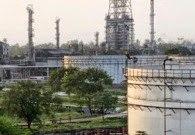
Crude Oil TanksMega Billion Corporation Limited is a leader in the of Nigerian Bonny Light Crude Oil (BLCO) sales market. As a privately held company, Mega Billion Corp. Nigeria Ltd is committed to and is focused on delivering reliable services to all her clients. Mega Billion Corporation Ltd is determined to continue to grow in the energy sector and to become one of the recognized leaders in the Nigerian oil and gas industry.

Simplifying Nigerian Bonny Light Crude Oil Buying, BLCO

Crude Oil Tanks Mega Billion Corporation Nigeria Limited has an excellent track record of reliability in the supply of Bonny light crude oil, BLCO. We protect our buyers with 2% Performance Bond while we also expect protection from our customers with bank instrument from the world's top banks. We deliver on TTO, TTT, CIF and FOB basis.

If you wish to purchase Bonny Light Crude Oil from a reliable seller, contact us and we commence the buyer friendly procedure to enable this.


Showing posts with label Sell Crude Oil. Show all posts

Saturday, 27 September 2014

Keystone foes urge top Nebraska court to void pipeline path

Nebraska landowners opposed to the proposed $5.4 billion Keystone XL pipeline urged the state’s highest court to uphold a judge’s ruling invalidating the route mapped by Governor Dave Heineman and TransCanada Corp.


The property owners urged the state Supreme Court to uphold a February ruling effectively blocking the pipeline. Judge Stephanie Stacy in Lincoln declared TransCanada a common carrier like a railroad. As such, a 2012 law giving the governor control over the path violated a part of the state constitution vesting power in the Public Service Commission.


TransCanada “offers pipeline structures for transportation services, like taxis offer rides to passengers for a fee, and truckers offer cartage for dollars per mile,” the landowners said in a June 20 legal brief. “The currently-proposed pipeline is a structure that will transport crude oil for hire.”


TransCanada, based in Calgary, seeks to build a 1,179-mile (1,897-km) conduit capable of carrying 830,000 bopd from Hardisty, Alberta, to Steele City, Nebraska, where it would connect to an existing network.


Supporters say Keystone will create jobs and promote energy independence. Opponents say petroleum derived from Alberta’s oil sands will contribute to global warming.


The decision on whether to approve Keystone will fall to President Barack Obama, who may wait until the Nebraska court rules. The judges have yet to schedule arguments, and a decision may not come until after Congress’s midterm elections.


Energy East


TransCanada has said it will seek Canadian government permission to construct a different, longer, pipeline giving it a conduit to the Atlantic Ocean. That proposed 2,700-mile pipeline, called Energy East, would carry 1.1 MMbopd across six provinces to a refinery and export terminal at Saint John, New Brunswick.


Heineman, a Republican who’s leaving office on Dec. 31, and state Attorney General Jon Bruning, who sought to succeed him, argued in April that the three landowners who sued haven’t shown they’ve been injured by the plan and lack standing to sue.


Bruning last month lost the Republican Party’s gubernatorial primary to former Ameritrade Holding Corp. Vice Chairman Pete Ricketts.


David Domina, the landowners’ lawyer and a Democrat seeking a U.S. Senate seat, said his clients have been harmed.


“There is no competitor, different regulator or differently affected landowner to bring this suit,” he said in a phone interview. “The state belongs to the citizens, and they are its saving watchfulness.”


Providing useful resources, articles and writings on crude oil, other petroleum products, energy and gas. By Mega Billion Corporation BLCO seller, Nigeria, online.

Monday, 4 August 2014

Oil supply expected to grow faster than demand, says consultancy

The IEA, on June 17, released its Medium-Term Oil Market Report. Rystad Energy, an independent oil and gas consulting group, has compared the revised IEA demand outlook with its own supply estimates derived from its global upstream database, UCube. The estimates are based on Rystad’s bottom-up analysis of 30,000 fields and 2,500 oil companies in 150 countries.


Analysis shows that oil markets have gradually been tightening over the last two years, while the outlook indicates a possible inflection point in early 2015 and an increasing downward pressure on oil prices for the coming two to three years.


The recent geopolitical outages of oil production from the Middle East and North Africa have, until now, been perfectly balanced by the increased supply of unconventional tight oil from the U.S. This predicted easing of the oil markets is partly driven by an assumption of gradual return over the next two years of oil from Libya, Iran, Iraq and Sudan, while U.S. drillers are continuing their activities with unchanged intensity and increased efficiency.


Rystad Energy now forecasts North American tight liquids production to pass 10 million bbl before 2020, making the region a net exporter of seaborne crude and petroleum products within three years.


Providing useful resources, articles and writings on crude oil, other petroleum products, energy and gas. By Mega Billion Corporation BLCO seller, Nigeria, online.

Sunday, 27 July 2014

North Dakota crude oil production barrels past 1 MMbopd

North Dakota, which became just the fourth state to record oil production above 1 MMbopd, could see even stronger growth over the summer as improved weather makes life easier for drilling crews.


Output increased to 1,001,149 barrels a day in April, the state’s Department of Mineral Resources reported yesterday. Texas, California and Alaska have crossed the million-barrel mark. Only Texas remains above the state, at almost 3 MMbopd.


April oilfield work was hampered by heavy rain that shut roads and strong winds that closed down operations. Crews completed 200 wells during the month, and another 600 are already drilled and just waiting on hydraulic fracturing, or fracking. Better weather in the summer months should allow more new wells to start gushing oil.


“As the weather improves, operators should have full utilization of all their rigs, and possibly additional completion crews to whittle down the backlog,” Jonathan Garrett, an upstream analyst at Wood Mackenzie Ltd. in Houston, said in a phone interview today. “I wouldn’t be surprised to see quite a bit of production growth over the summer. It should be pretty impressive.”


Oil and gas from the Bakken and other shale formations helped the U.S. produce the equivalent of 87% of its energy needs in 2013, the highest level since 1985, according to data from the Energy Information Administration. The U.S. imported 7.7 MMbopd in 2013, the least since 1996.


Hydrocarbon-Rich


Most oil produced in North Dakota comes from the Bakken and Three Forks shale formations, layers of hydrocarbon-rich rock more than a mile beneath the Earth’s surface. High crude prices and improvements in drilling technology have helped companies like Continental Resources and Whiting Petroleum tap into the previously inaccessible shale.


Output from shale wells declines by 60% to 70% in the first year, according to Austin, Texas-based Drillinginfo Inc., faster than traditional wells. Because of the steep decline rate, companies need to finish new wells constantly. Bad weather can slow the completion process, curbing production growth.


Adverse Weather


In April, roads were shut for three days because of heavy rain, and there were nine to 11 days of wind blowing faster than 35 mph, too strong for completion work, Lynn Helms, the director of the state’s Department of Mineral Resources, said during a conference call with reporters yesterday. The weather in May and June has been much more benign.


“Permitting and drilling activity indicates that we’ll continue to see production grow and build well above 1 MMbopd,” he said.


Producers are also drilling better wells, Garrett said. They’re increasing horsepower and using more water and sand in the fracking process, which is helping to increase initial production and slow decline rates.


Bakken crude priced at Enbridge Inc.’s pipeline hub at Clearbrook, Minnesota, traded at a discount of $6.50 less than West Texas Intermediate in Cushing, Oklahoma, at 8:59 a.m. New York time, according to data compiled by Bloomberg.


About 30% of North Dakota’s oil left the state by pipeline and 63% by rail in April, according to the state’s pipeline authority. It’s the lowest percentage of rail transportation since September.


It costs $9 to $10 a barrel to transport oil by train to East Coast refineries, and $6 to $7 a barrel to rail crude to Washington plants, Tesoro Corp. said in a February presentation to investors.


The discount of Bakken crude priced at the wellhead to Brent crude, the benchmark for global waterborne crude, is about $20.71 a barrel, according to data compiled by Bloomberg.


Providing useful resources, articles and writings on crude oil, other petroleum products, energy and gas. By Mega Billion Corporation BLCO seller, Nigeria, online.

Tuesday, 15 July 2014

Keystone win easier with Canada carbon limits, Trudeau says

Justin Trudeau says he would bolster Canada’s case for approval of the Keystone XL pipeline by introducing financial incentives to curb greenhouse-gas emissions in the oil and gas industry.


Canada should establish a price for carbon emissions to show it’s addressing climate change and to give President Barack Obama political “cover” to approve TransCanada Corp.’s $5.4 billion project, Trudeau, leader of Canada’s Liberal Party said yesterday, June 25, in an interview in Fort McMurray, Alberta. He said he was “agnostic” about how the price should be set.


“The way to promote Keystone XL is not to be shouting, ‘You need to approve this.’ It’s to actually get our own house in order and demonstrate we’re serious about the responsibilities that come with carbon emissions,” said Trudeau. “That’s why it’s become politically untenable to approve something that should have been approved years ago.”


Trudeau’s call to action contrasts with Prime Minister Stephen Harper’s position that he won’t regulate oil and gas emissions without similar U.S. measures because it would put Canadian producers at a competitive disadvantage. Harper and his ministers have continued to press for Keystone in speeches and meetings with U.S. officials.


The State Department said in April it would again delay a decision on Calgary-based TransCanada’s conduit in order to give parties more time to comment. That further stalled a project first proposed in 2008 and originally intended to come online in 2012. Obama has said he won’t approve the pipeline if it significantly adds to carbon emissions linked to global warming.


Crude Discount


Canada has the world’s third-largest crude reserves, much of it in the oil sands near Fort McMurray. The area’s heavy crude has traded at an average of $18.70 per barrel below the U.S. benchmark over the last five years due in part to transportation bottlenecks. The discount costs Canada’s economy as much as C$50 million a day, according to the Canadian Chamber of Commerce. Keystone XL would carry 830,000 bopd from the oil sands to Gulf Coast refineries.


Natural Resources Minister Greg Rickford said he’ll continue working with U.S. Energy Secretary Ernest Moniz to “enhance cooperation on energy and the economy.” Canada won’t “take actions unilaterally that would put Canadian jobs and the economy at a disadvantage,” Rickford said in an emailed statement today, June 26, in response to Trudeau’s comments.


Rickford, Finance Minister Joe Oliver and Foreign Affairs Minister John Baird all traveled to New York this month, arguing in media interviews and at an energy conference that Obama has unfairly entangled the $5.4 billion pipeline with U.S. politics.


‘Worse Relationship’


“It’s not moving forward,” Trudeau said of the pipeline. “We’ve never had a worse relationship with the United States, because perhaps our entire continental relationship has been reduced to not just one industry or one company but one single project.”


Trudeau, son of former Prime Minister Pierre Trudeau, cited moves by Obama this month to cut emissions from U.S. power plants, that country’s largest source of greenhouse gases.


Harper said June 9 that the U.S. moves don’t go as far as Canada’s regulations in the power-generation sector. He said Canada would deal with climate change in a way that protects Canadian jobs, not destroys them.


Trudeau, 42, said his Liberals would spell out in an election platform how they would go about putting a price on carbon. Former Liberal leader Stephane Dion lost the 2008 election after proposing a carbon tax that was vilified by the Conservatives.


Leading Polls


The Liberals have held a consistent lead in public opinion polls since Trudeau became leader in April last year. While the next general election is scheduled for October, 2015, there are partial elections scheduled June 30 to fill four vacancies, including the district containing Fort McMurray.


“The Liberal Party is somewhat agnostic,” Trudeau said. “We recognize the fact that the discussion around carbon pricing has been incredibly polarized politically.”


Harper’s Conservative-Party government has been regulating greenhouse-gas emissions on an industry-by-industry basis. The main opposition New Democratic Party has proposed a cap-and-trade system, which Conservative lawmakers have labeled a “tax on everything.”


At the provincial level, Alberta requires companies that emit more than 100,000 metric tons of greenhouse gases a year to cut emissions per barrel by 12% percent or pay a penalty of C$15 per ton. The proceeds of the levy are paid into a fund that invests in technologies that cut carbon output.


Carbon Tax


British Columbia established a carbon tax in 2008, which is imposed on fossil-fuel consumers and designed to encourage use of alternative fuels.


Whatever form the carbon price takes, businesses need clarity, Trudeau said. Companies “want to know where the benchmarks will be, what the expectations will be, for the next 10 years, for the next 25 years.”


“That kind of clarity will allow industry to make a business model, invest in capital upgrades they need to justify to their shareholders,” he said. “That kind of clarity is exactly what this government hasn’t given.”


While Trudeau has joined Harper in supporting Keystone XL, he reiterated his intention to kill another proposed pipeline: Enbridge Inc.’s Northern Gateway, which was approved by Harper’s cabinet earlier this month.


Trudeau said the project, which would cross the mountains of British Columbia and bring oil sands crude to the Pacific Coast for export by tanker, never had local support and was “doomed” from the beginning.


“There are a lot of tools at a prime minister’s and a government’s disposal,” Trudeau said when asked how he’d stop Northern Gateway. “We’ll use the most appropriate one that has the lowest impact and cost for Canadians.”


Providing useful resources, articles and writings on crude oil, other petroleum products, energy and gas. By Mega Billion Corporation BLCO seller, Nigeria, online.

Contact Mega Billion Corporation

Contact Mega Billion Corporation