Mega Billion Corporation Ltd


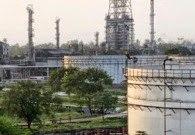
Crude Oil TanksMega Billion Corporation Limited is a leader in the of Nigerian Bonny Light Crude Oil (BLCO) sales market. As a privately held company, Mega Billion Corp. Nigeria Ltd is committed to and is focused on delivering reliable services to all her clients. Mega Billion Corporation Ltd is determined to continue to grow in the energy sector and to become one of the recognized leaders in the Nigerian oil and gas industry.

Simplifying Nigerian Bonny Light Crude Oil Buying, BLCO

Crude Oil Tanks Mega Billion Corporation Nigeria Limited has an excellent track record of reliability in the supply of Bonny light crude oil, BLCO. We protect our buyers with 2% Performance Bond while we also expect protection from our customers with bank instrument from the world's top banks. We deliver on TTO, TTT, CIF and FOB basis.

If you wish to purchase Bonny Light Crude Oil from a reliable seller, contact us and we commence the buyer friendly procedure to enable this.


Showing posts with label Crude Oil Facilitator. Show all posts

Tuesday, 23 September 2014

ZEiTECS completes first commercial rigless retrieval of cable deployed ESP

ZEiTECS has announced the world’s first rigless installation and retrieval of the NAUTILUS ESP, a cable-deployed electric submersible pump system (ESP), in a customer well in West Texas.


The system was deployed on December 19, 2013, and ran for 139 days until planned shutdown on May 7; the system was retrieved successfully on May 9.


The ESP was retrieved using ZEiTECS’ Launch and Recovery System (LARS). LARS is a compact, rigless injector-based system that eliminates the need for a rig or heavy coiled tubing unit to replace failed ESPs.


The NAUTILUS ESP system was deployed on a high-strength DC coaxial cable and converts DC power to AC power downhole to drive any standard inverted ESP. The system was set at 2,600 ft. and retrieved in only 40 minutes using the LARS, at an average rate of 65 ft. per minute.


The rigless ESP operation was completed using a 400 series Baker Hughes inverted ESP deployed inside 5.5” tubing, producing 900 bbl of fluid per day. The NAUTILUS ESP system can be used as a permanent production system, as well as a temporary well intervention system for well testing and well clean-up purposes.


Providing useful resources, articles and writings on crude oil, other petroleum products, energy and gas. By Mega Billion Corporation BLCO seller, Nigeria, online.

Sunday, 21 September 2014

Statoil reports fire at Ohio wellsite

A fire reported on June 28 at Statoil’s onshore Eisenbarth well pad in Monroe County, Ohio has been extinguished but follow-up work is continuing.


The fire was limited to surface equipment; none of the wells have been on fire. A Statoil well inspection team on site reported yesterday, June 29, that all wells are secure and are shut-in.


All personnel working on the site were evacuated and remain safe. In addition, as a precautionary measure, residents living nearby were evacuated temporarily. There have been no reports of serious injuries to date associated with this incident.


Statoil continues to work with local, state and federal authorities to manage this incident.


Providing useful resources, articles and writings on crude oil, other petroleum products, energy and gas. By Mega Billion Corporation BLCO seller, Nigeria, online.

Tuesday, 9 September 2014

Germany to draft anti-shale fracing rules on public opposition

Germany plans to adopt regulation that will rule out shale fracing for the foreseeable future.


The government wants to ban hydraulic fracturing in shale rocks and coal beds at depths less than 3 km (1.8 miles) and prohibit all types of fracing in water protection areas, Economy Minister Sigmar Gabriel and Environment Minister Barbara Hendricks said today, July 4. The government will start drafting legislation and seek to adopt it in the second half, Hendricks told reporters today in Berlin. The rules will be re-evaluated in 2021.


Fracing is unpopular in Germany even as Chancellor Angela Merkel’s government is keen to develop domestic energy sources as it closes nuclear plants by 2022. While companies including Exxon Mobil Corp. have drilled test wells into unconventional gas reservoirs in Germany to emulate the U.S. shale-gas boom, little headway has been made because of public opposition.


The new rules, if adopted, would be “the strictest that ever existed in this respect,” the ministers said in a joint letter to the Social Democrats. “Fracing for shale and coal bed gas for economic reasons won’t be possible in Germany for the foreseeable future.”


Fracing for tight gas, which has been done in Germany since the 1960s, will remain allowed under stricter conditions for frac fluids, the ministers said. Fracing will be allowed for scientific purposes if the fluids aren’t harmful to water supplies, it said.


Not Far Enough


The rules don’t go far enough and leave “loopholes” to allow fracing at a later stage, said Julia Verlinden, energy spokeswoman for the opposition Green Party.


“If you want to prevent fracing, you don’t need science projects,” she said today in an emailed statement. “The risk to harm our ground and drinking water supplies with fracing doesn’t justify the short-term drilling for comparably little gas.”


Europe is divided into different camps on fracing. It’s backed by nations including the UK, Poland and Spain and opposed in countries such as France and Germany.


The oil and gas industry says fracing should be at least tested to keep the door open to a technology that may redraw the energy map across Europe by reducing reliance on Russia. Germany has shale gas reserves for about 10 years of full supply and “maybe much more than that,” Kurt Bock, the CEO of the world’s biggest chemical maker BASF SE, said yesterday at a conference in Berlin.


Providing useful resources, articles and writings on crude oil, other petroleum products, energy and gas. By Mega Billion Corporation BLCO seller, Nigeria, online.

Sunday, 27 July 2014

North Dakota crude oil production barrels past 1 MMbopd

North Dakota, which became just the fourth state to record oil production above 1 MMbopd, could see even stronger growth over the summer as improved weather makes life easier for drilling crews.


Output increased to 1,001,149 barrels a day in April, the state’s Department of Mineral Resources reported yesterday. Texas, California and Alaska have crossed the million-barrel mark. Only Texas remains above the state, at almost 3 MMbopd.


April oilfield work was hampered by heavy rain that shut roads and strong winds that closed down operations. Crews completed 200 wells during the month, and another 600 are already drilled and just waiting on hydraulic fracturing, or fracking. Better weather in the summer months should allow more new wells to start gushing oil.


“As the weather improves, operators should have full utilization of all their rigs, and possibly additional completion crews to whittle down the backlog,” Jonathan Garrett, an upstream analyst at Wood Mackenzie Ltd. in Houston, said in a phone interview today. “I wouldn’t be surprised to see quite a bit of production growth over the summer. It should be pretty impressive.”


Oil and gas from the Bakken and other shale formations helped the U.S. produce the equivalent of 87% of its energy needs in 2013, the highest level since 1985, according to data from the Energy Information Administration. The U.S. imported 7.7 MMbopd in 2013, the least since 1996.


Hydrocarbon-Rich


Most oil produced in North Dakota comes from the Bakken and Three Forks shale formations, layers of hydrocarbon-rich rock more than a mile beneath the Earth’s surface. High crude prices and improvements in drilling technology have helped companies like Continental Resources and Whiting Petroleum tap into the previously inaccessible shale.


Output from shale wells declines by 60% to 70% in the first year, according to Austin, Texas-based Drillinginfo Inc., faster than traditional wells. Because of the steep decline rate, companies need to finish new wells constantly. Bad weather can slow the completion process, curbing production growth.


Adverse Weather


In April, roads were shut for three days because of heavy rain, and there were nine to 11 days of wind blowing faster than 35 mph, too strong for completion work, Lynn Helms, the director of the state’s Department of Mineral Resources, said during a conference call with reporters yesterday. The weather in May and June has been much more benign.


“Permitting and drilling activity indicates that we’ll continue to see production grow and build well above 1 MMbopd,” he said.


Producers are also drilling better wells, Garrett said. They’re increasing horsepower and using more water and sand in the fracking process, which is helping to increase initial production and slow decline rates.


Bakken crude priced at Enbridge Inc.’s pipeline hub at Clearbrook, Minnesota, traded at a discount of $6.50 less than West Texas Intermediate in Cushing, Oklahoma, at 8:59 a.m. New York time, according to data compiled by Bloomberg.


About 30% of North Dakota’s oil left the state by pipeline and 63% by rail in April, according to the state’s pipeline authority. It’s the lowest percentage of rail transportation since September.


It costs $9 to $10 a barrel to transport oil by train to East Coast refineries, and $6 to $7 a barrel to rail crude to Washington plants, Tesoro Corp. said in a February presentation to investors.


The discount of Bakken crude priced at the wellhead to Brent crude, the benchmark for global waterborne crude, is about $20.71 a barrel, according to data compiled by Bloomberg.


Providing useful resources, articles and writings on crude oil, other petroleum products, energy and gas. By Mega Billion Corporation BLCO seller, Nigeria, online.

Friday, 11 July 2014

U.S. crude exports in April rise to highest level in 15 years, says EIA

The U.S. exported 268,000 bpd of crude oil in April (the latest data available from the U.S. Census Bureau), the highest level of exports in 15 years, reported the U.S. Energy Information Administration. Exports have increased sharply since the start of 2013, and have exceeded 200,000 bpd in five of the past six months. The increase in crude exports is largely the result of rising U.S. crude production, which was 8.2 million bpd in March.


To export crude oil from the U.S., a company must obtain a license from the Bureau of Industry and Security (BIS) of the U.S. Department of Commerce. Under export licensing requirements, the following kinds of transactions will generally be approved:


Exports from Alaska' s Cook Inlet
Exports to Canada for consumption or use therein
Exports in connection with the refining or exchange of strategic petroleum reserve oil
Exports that are consistent with international energy supply agreements
Exports of foreign-origin crude
Exports of California heavy crude up to an average of 25,000 bpd
Temporary exports or exchanges


Licenses for other exports of U.S.-origin crude are considered on a case-by-case basis. For such other exports, the regulations describe the characteristics of transactions that will generally be approved as in the national interest.


Almost all of the crude oil exported from the U.S. has been delivered to Canada, and most of the recent increase in crude oil exports has been from the U.S. Gulf Coast (PADD 3). Gulf Coast crude exports averaged 134,000 bpd in first-quarter 2014, a 283% increase over 2013' s record high of 35,000 bpd. In first-quarter 2014, nearly 75% of Gulf Coast exports have left the region from the Houston-Galveston district, in Texas. The remaining barrels were loaded in Port Arthur, Texas, and New Orleans, La.


Exports from the East Coast (PADD 1) averaged 30,000 bpd in first-quarter 2014, down slightly from 2013 levels, but up from 9,000 bpd in 2012. First-quarter exports from PADD 1 were evenly distributed between the Port of New York and Portland, Maine, which is the starting point of a pipeline that delivers crude to refineries in the Montreal area. Exports of crude from the Midwest (PADD 2) have long been a source of crude for refineries in Sarnia, Ontario.


Providing useful resources, articles and writings on crude oil, other petroleum products, energy and gas. By Mega Billion Corporation BLCO seller, Nigeria, online.

Contact Mega Billion Corporation

Contact Mega Billion Corporation