Mega Billion Corporation Ltd


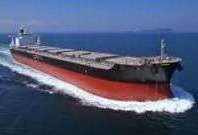
Crude Oil TanksMega Billion Corporation Limited is a leader in the of Nigerian Bonny Light Crude Oil (BLCO) sales market. As a privately held company, Mega Billion Corp. Nigeria Ltd is committed to and is focused on delivering reliable services to all her clients. Mega Billion Corporation Ltd is determined to continue to grow in the energy sector and to become one of the recognized leaders in the Nigerian oil and gas industry.

Simplifying Nigerian Bonny Light Crude Oil Buying, BLCO

Crude Oil Tanks Mega Billion Corporation Nigeria Limited has an excellent track record of reliability in the supply of Bonny light crude oil, BLCO. We protect our buyers with 2% Performance Bond while we also expect protection from our customers with bank instrument from the world's top banks. We deliver on TTO, TTT, CIF and FOB basis.

If you wish to purchase Bonny Light Crude Oil from a reliable seller, contact us and we commence the buyer friendly procedure to enable this.


Showing posts with label The Oil Business. Show all posts

Friday, 3 October 2014

Devon sells non-core U.S. assets to Linn Energy for $2.3 bn

Devon Energy Corporation has entered into a definitive agreement to sell all of its non-core U.S. oil and gas properties to Linn Energy for $2.3 billion, or approximately $1.8 billion after tax.


The agreement covers Devon’s remaining assets targeted for divestiture and includes properties in the Rockies, onshore Gulf Coast, and Mid-Continent regions of the U.S.


“With the sale of our remaining non-core assets, the portfolio transformation that we announced late last year is now complete,” said John Richels, president and CEO of Devon. “In a short period of time we transformed our portfolio through three significant steps: the accretive Eagle Ford entry, the innovative creation of EnLink Midstream, and the sale of our non-core properties. The sale of Canadian and U.S. non-core properties over the past few months has generated in excess of $5 billion of proceeds at an accretive multiple of nearly 7 times 2013 EBITDA.”


“Devon is now concentrated in some of the most attractive North America resource plays, with liquids expected to approach 60% of our production by year-end and multi-year oil production growth projected to be in excess of 20%,” said Richels.


Devon’s production from these non-core U.S. assets is currently 275 million cubic feet of gas equivalent per day, of which approximately 80% is natural gas. At December 31, 2013, proved reserves associated with these properties amounted to 1.242 Tcf of gas equivalent. EBITDA accompanying these assets totaled $350 million in 2013.


The transaction is subject to customary terms and conditions and is expected to close in the third quarter of 2014, with an effective date of April 1, 2014.


Providing useful resources, articles and writings on crude oil, other petroleum products, energy and gas. By Mega Billion Corporation BLCO seller, Nigeria, online.

Tuesday, 9 September 2014

Germany to draft anti-shale fracing rules on public opposition

Germany plans to adopt regulation that will rule out shale fracing for the foreseeable future.


The government wants to ban hydraulic fracturing in shale rocks and coal beds at depths less than 3 km (1.8 miles) and prohibit all types of fracing in water protection areas, Economy Minister Sigmar Gabriel and Environment Minister Barbara Hendricks said today, July 4. The government will start drafting legislation and seek to adopt it in the second half, Hendricks told reporters today in Berlin. The rules will be re-evaluated in 2021.


Fracing is unpopular in Germany even as Chancellor Angela Merkel’s government is keen to develop domestic energy sources as it closes nuclear plants by 2022. While companies including Exxon Mobil Corp. have drilled test wells into unconventional gas reservoirs in Germany to emulate the U.S. shale-gas boom, little headway has been made because of public opposition.


The new rules, if adopted, would be “the strictest that ever existed in this respect,” the ministers said in a joint letter to the Social Democrats. “Fracing for shale and coal bed gas for economic reasons won’t be possible in Germany for the foreseeable future.”


Fracing for tight gas, which has been done in Germany since the 1960s, will remain allowed under stricter conditions for frac fluids, the ministers said. Fracing will be allowed for scientific purposes if the fluids aren’t harmful to water supplies, it said.


Not Far Enough


The rules don’t go far enough and leave “loopholes” to allow fracing at a later stage, said Julia Verlinden, energy spokeswoman for the opposition Green Party.


“If you want to prevent fracing, you don’t need science projects,” she said today in an emailed statement. “The risk to harm our ground and drinking water supplies with fracing doesn’t justify the short-term drilling for comparably little gas.”


Europe is divided into different camps on fracing. It’s backed by nations including the UK, Poland and Spain and opposed in countries such as France and Germany.


The oil and gas industry says fracing should be at least tested to keep the door open to a technology that may redraw the energy map across Europe by reducing reliance on Russia. Germany has shale gas reserves for about 10 years of full supply and “maybe much more than that,” Kurt Bock, the CEO of the world’s biggest chemical maker BASF SE, said yesterday at a conference in Berlin.


Providing useful resources, articles and writings on crude oil, other petroleum products, energy and gas. By Mega Billion Corporation BLCO seller, Nigeria, online.

Friday, 5 September 2014

Gulf Keystone rises most in month on Kurdistan output estimate

Gulf Keystone Petroleum Ltd., an oil producer in Iraq’s Kurdistan region, gained the most in almost a month after saying production from its key asset was proceeding as planned.


The company advanced as much as 6.3%, the most since May 15, to 85 pence in London trading and was at 82.75 pence at 11:41 a.m. local time.


Gulf Keystone expects production from Shaikan to rise to 40,000 bopd by the end of the year, Hamilton, Bermuda-based Gulf Keystone said in a statement. The shares had lost 14% this week through yesterday, June 12, amid concern violent unrest in Iraq could spread toward Kurdistan.


The company’s operations “are progressing in line with our previous guidance, whilst we remain alert to the current security situation in Iraq, which has recently escalated outside the Kurdistan region,” Todd Kozel, CEO, said in the statement.


Eight cargoes have so far been sold into the international market, it said.


Providing useful resources, articles and writings on crude oil, other petroleum products, energy and gas. By Mega Billion Corporation BLCO seller, Nigeria, online.

Friday, 11 July 2014

U.S. crude exports in April rise to highest level in 15 years, says EIA

The U.S. exported 268,000 bpd of crude oil in April (the latest data available from the U.S. Census Bureau), the highest level of exports in 15 years, reported the U.S. Energy Information Administration. Exports have increased sharply since the start of 2013, and have exceeded 200,000 bpd in five of the past six months. The increase in crude exports is largely the result of rising U.S. crude production, which was 8.2 million bpd in March.


To export crude oil from the U.S., a company must obtain a license from the Bureau of Industry and Security (BIS) of the U.S. Department of Commerce. Under export licensing requirements, the following kinds of transactions will generally be approved:


Exports from Alaska' s Cook Inlet
Exports to Canada for consumption or use therein
Exports in connection with the refining or exchange of strategic petroleum reserve oil
Exports that are consistent with international energy supply agreements
Exports of foreign-origin crude
Exports of California heavy crude up to an average of 25,000 bpd
Temporary exports or exchanges


Licenses for other exports of U.S.-origin crude are considered on a case-by-case basis. For such other exports, the regulations describe the characteristics of transactions that will generally be approved as in the national interest.


Almost all of the crude oil exported from the U.S. has been delivered to Canada, and most of the recent increase in crude oil exports has been from the U.S. Gulf Coast (PADD 3). Gulf Coast crude exports averaged 134,000 bpd in first-quarter 2014, a 283% increase over 2013' s record high of 35,000 bpd. In first-quarter 2014, nearly 75% of Gulf Coast exports have left the region from the Houston-Galveston district, in Texas. The remaining barrels were loaded in Port Arthur, Texas, and New Orleans, La.


Exports from the East Coast (PADD 1) averaged 30,000 bpd in first-quarter 2014, down slightly from 2013 levels, but up from 9,000 bpd in 2012. First-quarter exports from PADD 1 were evenly distributed between the Port of New York and Portland, Maine, which is the starting point of a pipeline that delivers crude to refineries in the Montreal area. Exports of crude from the Midwest (PADD 2) have long been a source of crude for refineries in Sarnia, Ontario.


Providing useful resources, articles and writings on crude oil, other petroleum products, energy and gas. By Mega Billion Corporation BLCO seller, Nigeria, online.

Contact Mega Billion Corporation

Contact Mega Billion Corporation